Rory and Julia’s marriage
The Hellbound HeartRory and Julia’s marriage is shaped by a widening divide between Rory’s devotion to a shared future and Julia’s continuing attachment to Frank Cotton. Their home initially promises a fresh beginning, but the marriage becomes a surface of domestic affection concealing Julia’s private efforts to restore Frank Cotton. Its final apparent moment of understanding is built on incomplete knowledge: Rory believes Julia has told him everything, while Kirsty recognizes that the person before her is Frank Cotton wearing Rory’s skin.
A Shared Home and Unequal Expectations
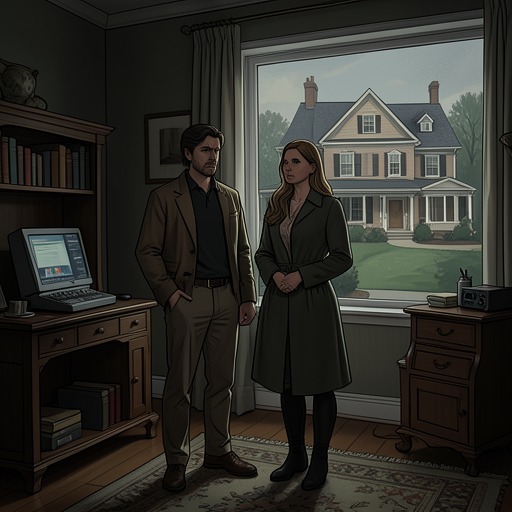
When Rory and Julia stand in the hallway of a house inherited jointly by Rory and Frank Cotton, Julia finds the place less appealing than she expected. The house has been empty for nearly three years, since Rory’s grandmother died, and has not been maintained. Rory treats its condition as a manageable task rather than a warning: he intends to buy out Frank Cotton, whom he regards as often short of money, and make the property into a home for the couple.
His language conveys confidence and tenderness. Rory wraps Julia in his arms, calls the house theirs, and imagines painting and caring for it until it feels like heaven. He asks her to trust him. Julia responds without open argument, but her expression leaves Rory’s reassurance less than convincing. The scene establishes a gap between his plans for a shared domestic life and her reservations, which the marriage’s later history makes more consequential.
The house also keeps Frank Cotton materially present in their married life. It belongs to Rory and Frank Cotton together, and Julia remembers that Frank Cotton disappeared shortly before her wedding to Rory. What Rory treats as a property problem is, for Julia, bound to the person whose return she has privately mourned. The planned home therefore cannot simply become a new beginning: its ownership and its rooms carry the marriage’s concealed past into its present.
The Marriage’s Premarital Shadow
Julia recalls that, before the wedding, she took Frank Cotton upstairs under the pretext of showing him her wedding dress. Kirsty was in the house, occupied with wedding preparations, while Julia privately understood that Frank Cotton’s arrival marked a decisive moment. The encounter was coercive, despite Julia’s later tendency to remember it through the language of passion. She repeatedly revisits the memory; with time, she recasts its injuries and tears as evidence of feeling, a revision that reveals how strongly her recollection is shaped by longing rather than by an unambiguous account of what occurred.
Frank Cotton disappeared the following day, leaving Julia to mourn him. She later wonders whether her grief began the deterioration of her relationship with Rory: although the connection was never explicitly discussed, she remembers thinking of Frank Cotton while making love to Rory. The marriage thus carries a secret emotional third presence from its beginning. Rory’s place as Julia’s husband does not erase the prior attachment; instead, their intimacy becomes a setting in which that attachment persists without his knowledge.
The age and precision of Julia’s recollection underline the persistence of the past. Four years and five months after the encounter, she has replayed it often. Her memory does not simply preserve the event; it changes how she interprets it, allowing grief and desire to soften the force of its coercion. This private reinterpretation helps explain why the possibility of Frank Cotton’s return later outweighs the life Rory is trying to build with her.
Domestic Affection and Private Withdrawal
After Julia discovers Frank Cotton in the Damp room, she understands that blood can strengthen him. She resolves to provide it, imagining that restoring him might make him grateful and responsive to her. The decision turns her marriage into an increasingly stark contrast: Rory believes the couple’s renewed cheerfulness reflects happiness in their new house, while Julia’s improved mood is connected to her secret plan for Frank Cotton.
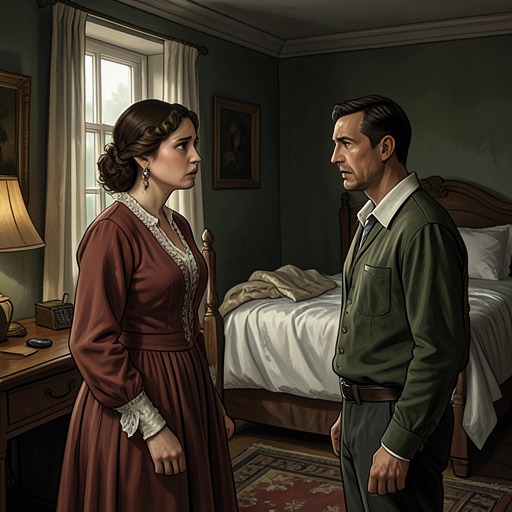
Rory responds to that apparent change with renewed enthusiasm. He works on redecorating and proposes that they investigate the dampness in the large upstairs room, intending eventually to make it a bedroom fit for Julia. She kisses his cheek and says they do not need another room yet. When he brings up the bedroom, he draws her close and behaves affectionately; she does not refuse him, but her outward compliance does not match her desire. During their intimacy, she closes her eyes and pictures Frank Cotton as he was, and more than once nearly speaks his name before stopping herself.
These moments expose the marriage’s divided reality without making Rory’s affection insincere. He plans, renovates, and seeks closeness; Julia accepts some of these gestures while withholding the truth about the person who occupies her thoughts and the purpose behind her changed mood. The house’s renovation becomes an image of the life Rory thinks they are improving, while Julia’s attention remains fixed on a past he cannot see.
Suspicion, Disclosure, and False Reassurance
Rory’s devotion predates the marriage: he has idolized Julia for as long as he can remember, imagined her in dreams, and written her inept love poems. He once regarded his promise to love and hold her until death as easy to keep. By the time he watches her in the hallway, however, suspicion has degraded the happiness he remembers. He hopes her troubled appearance means that a confession is coming and that he will be able to forgive her. His hope shows that he still reaches toward reconciliation even as doubt has altered his experience of their life together.
Julia tells Rory that it may be easier to show him what she means, then leads him upstairs. Later, when Kirsty asks what happened, Rory says Julia has told him everything and that it is all right. Kirsty immediately understands that he cannot know the whole story. The exchange gives the marriage a brief appearance of honesty and pardon, but the appearance depends on a disclosure that is not complete. Rory’s readiness to accept Julia’s explanation does not restore their former relationship; it leaves him vulnerable to the deception still unfolding around him.
Identity and the Marriage’s Ending
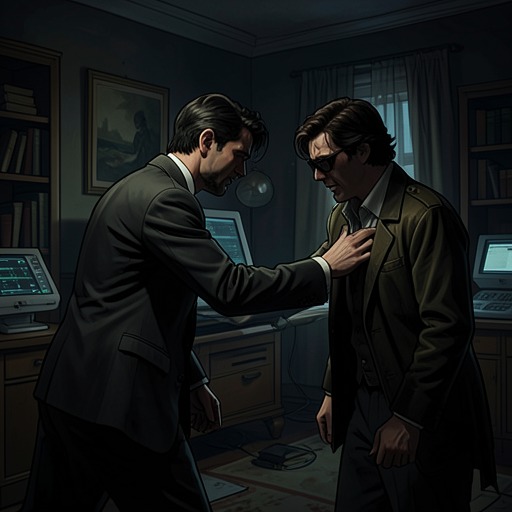
When Kirsty sees Rory again, she recognizes that the man addressing her is not Rory. Rory’s corpse is upstairs, and Frank Cotton has taken his skin; the familiar face and voice now conceal the person Julia has been trying to bring back. The marriage’s collapse is therefore also a collapse of recognition: the husband Julia appeared to guide toward the truth has been replaced by the brother whose memory and return have haunted their relationship.
The ending reverses Rory’s original confidence that the house could be made into a heaven for the couple. His promise of a shared home cannot overcome Julia’s concealed attachment, her decision to supply Frank Cotton with blood, or the deception that ends with Frank Cotton wearing Rory’s identity. Rory’s devotion and Julia’s longing do not meet in a mutual reckoning. Instead, the marriage’s final scene turns its most intimate bond—recognition of a spouse—into a fatal uncertainty.